
Fluoride Gives an Extra Boost for Healthy, Cavity-Free Smiles
Brushing, flossing, and regular dental visits are essential — but fluoride adds an extra layer of protection for your child’s teeth. Fluoride is a natural mineral that helps prevent cavities and tooth decay by coating the teeth and reducing the buildup of plaque.



Types of Fluoride: Systemic and Topical

Systemic fluoride is ingested, most commonly through community water supplies. As teeth develop beneath the gums, this type of fluoride strengthens the enamel, making teeth more resistant to decay once they emerge.
Topical fluoride is applied directly to the surface of the teeth to prevent cavities. It’s found in toothpaste, mouth rinses, and is also provided through professional treatments such as fluoride varnishes and foams. These professional applications are especially effective in reinforcing enamel and providing an added defense against tooth decay.
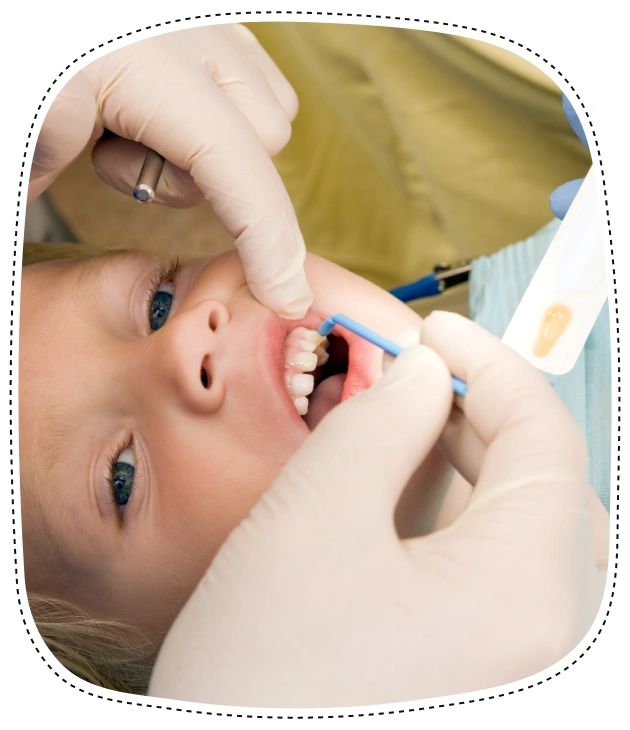

What to Expect During a Fluoride Treatment
Fluoride treatments at the dentist’s office are quick and easy — typically taking just a few minutes. After the treatment, your child may be asked to avoid rinsing, eating, or drinking for at least 30 minutes to allow the fluoride to fully absorb into the teeth.
Depending on your child’s oral health needs, the dentist may recommend fluoride treatments every three, six, or 12 months. In some cases, additional at-home fluoride products — such as rinses, gels, or antibacterial solutions — may be prescribed to offer extra protection against cavities.


How to Choose the Right Fluoride Treatment
When selecting an at-home fluoride product — such as toothpaste or mouthwash — always look for the American Dental Association (ADA) Seal of Acceptance. This seal ensures that the product has been thoroughly tested and meets the ADA’s high standards for safety and effectiveness. Choosing ADA-approved products helps you confidently protect your child’s smile with trusted, proven care.